Blog

The Avram Davidson Centenary


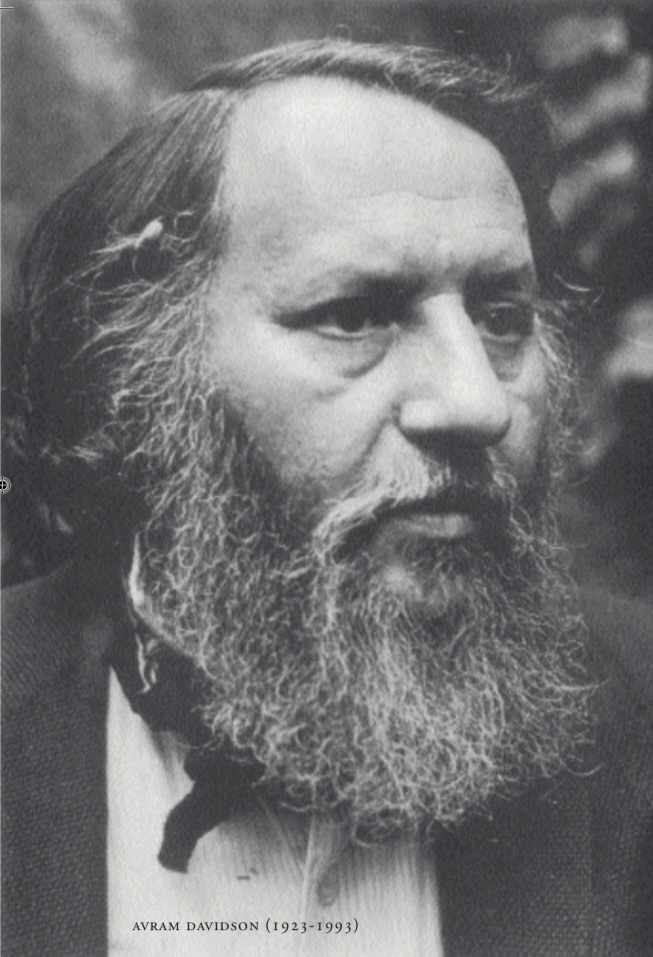
portrait of Avram Davidson, circa 1970sThis year marks the centenary of the birth of American science fiction writer and essayist Avram Davidson. Temporary Culture has been a champion of his work since the first iteration of the Avram Davidson website in 1995. The Nutmeg Point District Mail electronic newsletter, published for the Avram Davidson Society, began in 1996. Every dead author needs an advocate and the District Mail appeared regularly and often at first and served as herald and repository of activities on behalf of Davidson’s work. Something like a Davidson renaissance followed, with publication of The Avram Davidson Treasury and others. Many of these, including the Treasury,  are in print now at avramdavidson.com, where there is also a monthly podcast available.

The first books published by Temporary Culture carry the imprint of  The Nutmeg Point District Mail; and other titles followed. Three of the six publications of the Avram Davidson  Society are in print: The Wailing of the Gaulish Dead, Chance Meeting, and Naples. In connection with the centenary, all three titles are available at special celebratory prices (through 23 April, 2023), here.

Temporary Culture sale list January 2023

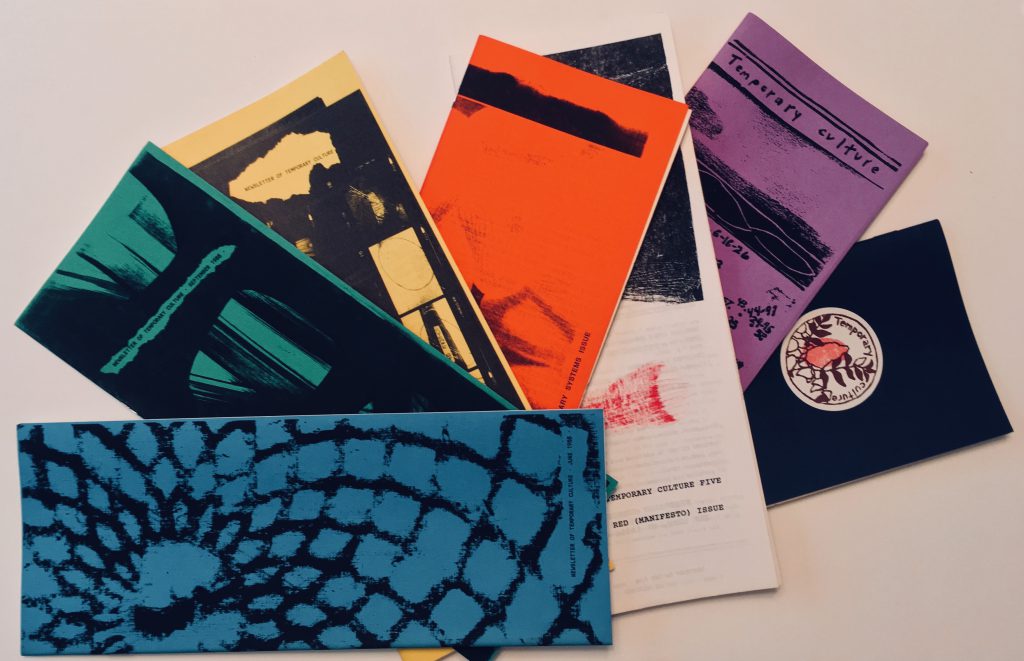
happy new year 2023 from Temporary Culture which started out as a photocopy ’zine in 1988(!). The January sale list features more than 100 items in all areas (all at discounts of 20 percent or more). Buy a book or two or three . . .

https://temporary-culture.com/book-category/sale-list-january-2023/

[through 31 January, sale prices net to all (postpaid in U.S.A.). Institutions may request deferred payment terms.]

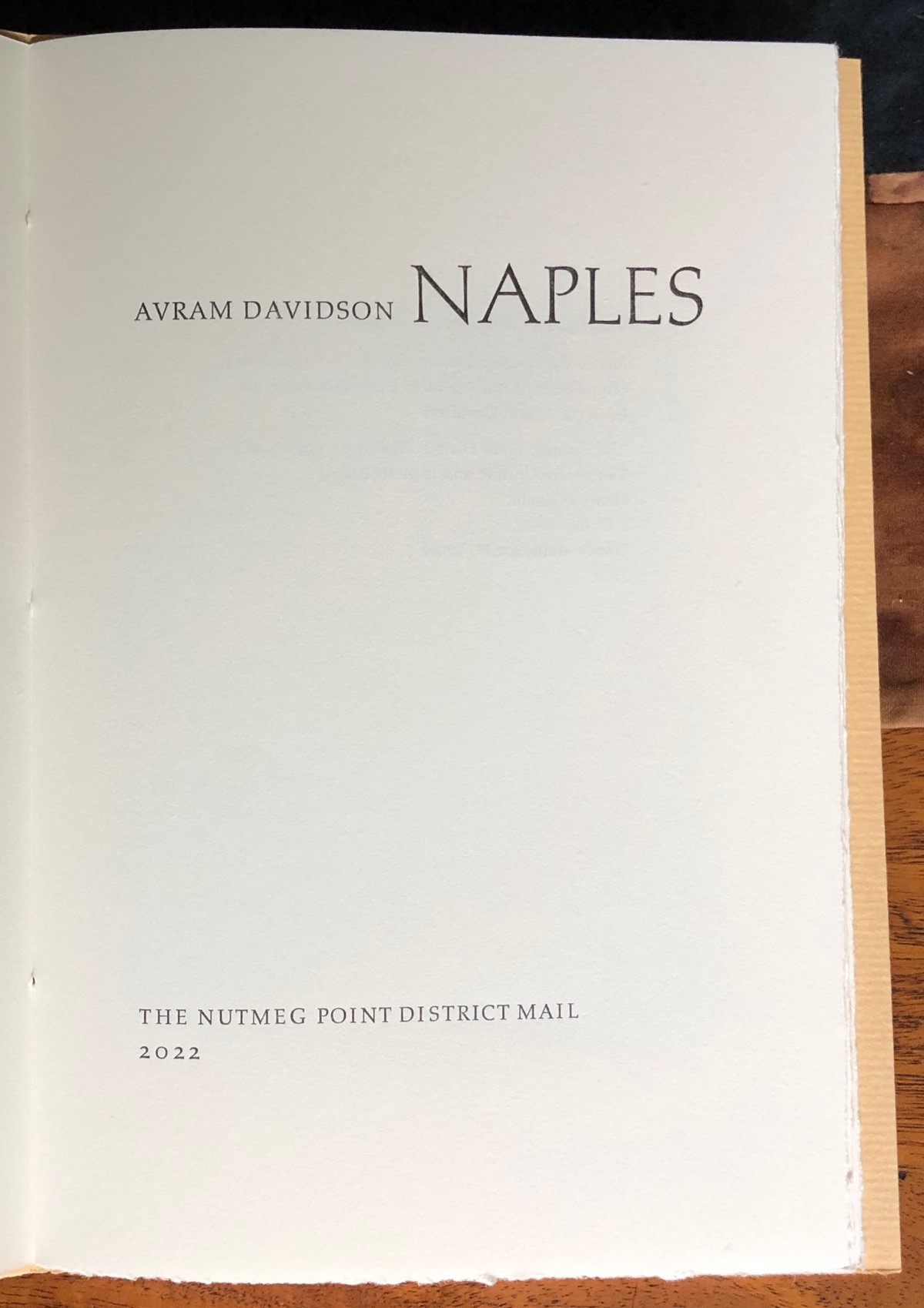
Naples by Avram Davidson

NAPLES by AVRAM DAVIDSON

Published in Napoli on 11 September 2022

NAPLES is a fine press edition of one of Avram Davidson’s darkest tales, originally published in the first Shadows anthology edited by Charles L. Grant. NAPLES won the World Fantasy award for short fiction in 1979, the same year Jorge Luis Borges was named the recipient of the World Fantasy Life Achievement award ; Davidson received that award in 1986.

Publications of the Avram Davidson Society, number six.
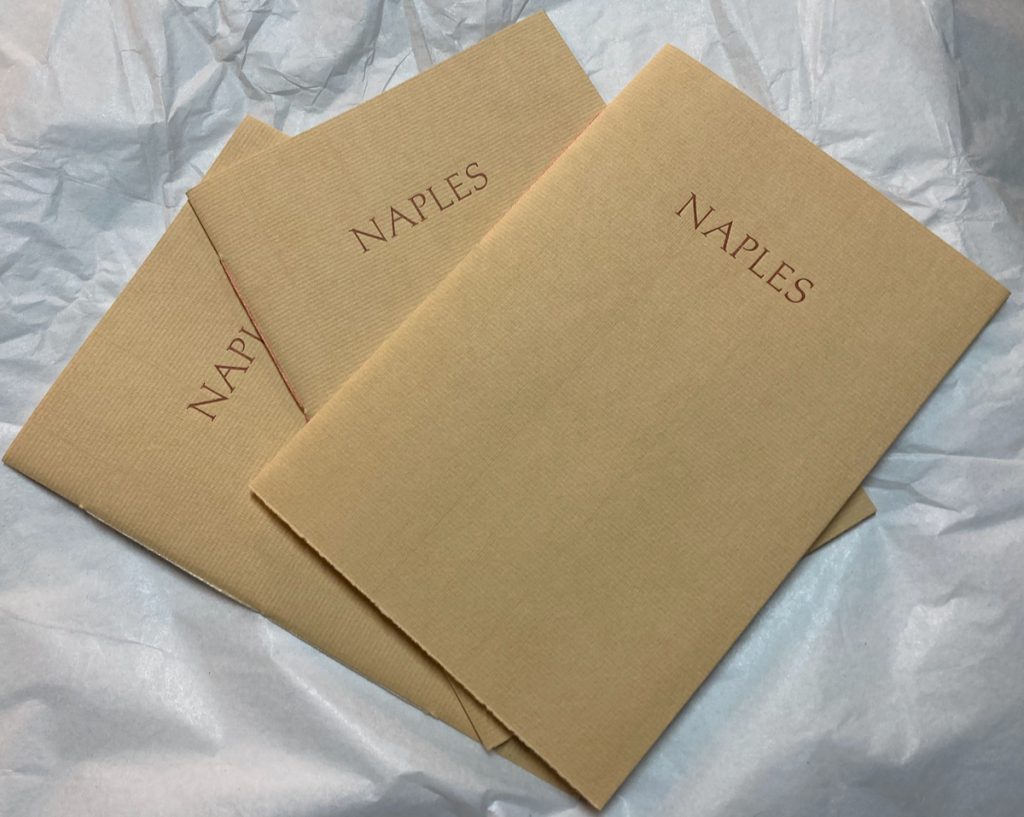
Edition of 160 copies, printed by hand at the Kelly-Winterton Press from Hermann Zapf’s Aldus type. Stitched in yellow Hahnemühle wrappers, title printed in terracotta on upper cover. [16] pp. 5-1/2 x 8-1/2 inches.

Ten copies, numbered i to x, were reserved for presentation ; 125 copies for distribution to members of the Association Internationale de Bibliophilie (AIB), on the occasion of the congress in Napoli, September 2022.

Twenty-five  Ten copies are available for members and friends of the Avram Davidson Society.

Price : $200 (in U.S.A., overseas add $15 postage).

ORDER HERE.

The Nutmeg Point District Mail is an imprint of Temporary Culture.

Inquiries and institutional orders to :

books [at] temporary-culture [dot] com
Temporary Culture
P.O. Box 43072
Upper Montclair, NJ 07043
USA

About

List no. 3 : Women Authors

List no. 3 from Temporary Culture for March 2021 is a selection of 16 books by women authors, most with a connection to the fantastic, including a fine copy of Katharine Burdekin’s Swastika Night (1937) in original dust jacket, and a variety of other titles new and old. Perhaps there will be something of interest for you.

List no. 3 March 2021

All items are illustrated on the website :

https://temporary-culture.com/book-category/subject/women-authors/

‘A Full Moon in March’ : Special Sale on ‘A Conversation larger than the Universe’

“erudite and altogether fascinating” — Publishers Weekly”

an important book” — Foundation

A Conversation larger than the Universe was the first ever science fiction exhibition at the Grolier Club in New York City. The exhibition was held from 25 January to 10 March 2018, and an illustrated record can be seen here.

For the month of March, Temporary Culture announce a special sale on the book issued in connection with the exhibition, A Conversation larger than the Universe by Henry Wessells.
If you haven’t read it yet, buy yourself a copy now! If you have read it, send a copy to a friend.


The trade edition, regularly priced $35.00, is available for $25.00 (postpaid in U.S.A.).

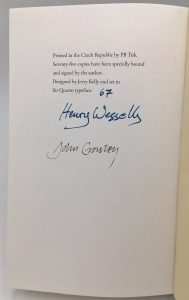
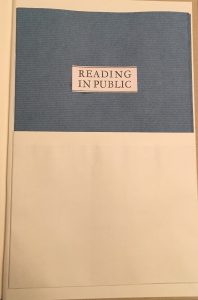
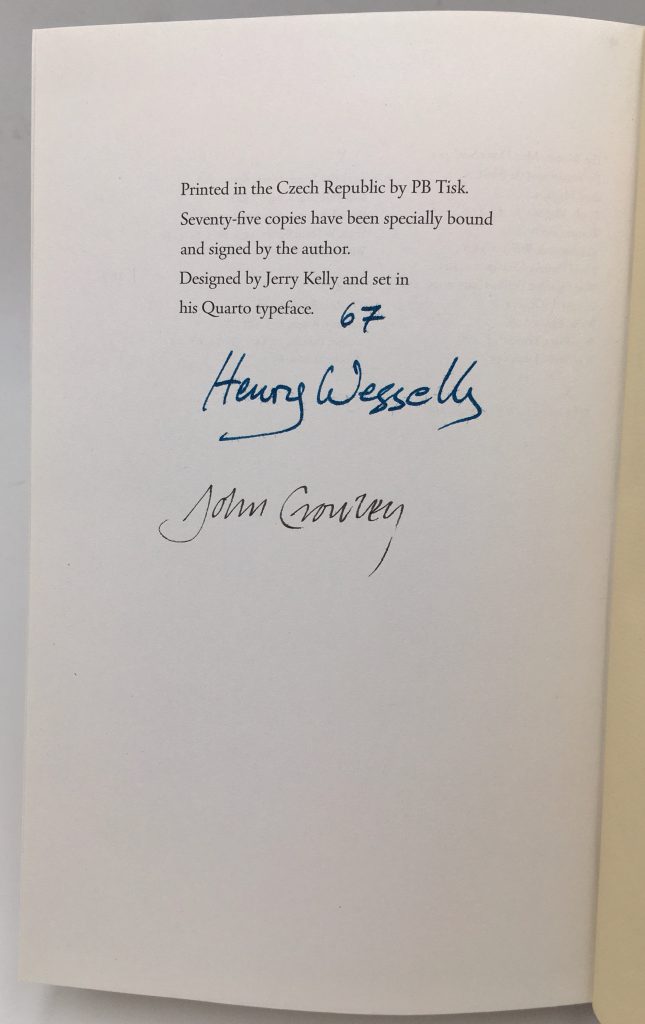
The Subscriber edition, signed by Wessells and John Crowley, with Reading in Public, signed by Michael Swanwick, regularly priced $300.00, is available for $250.00 (postpaid in U.S.A.).

(sale price for all orders through 31 March 2021)

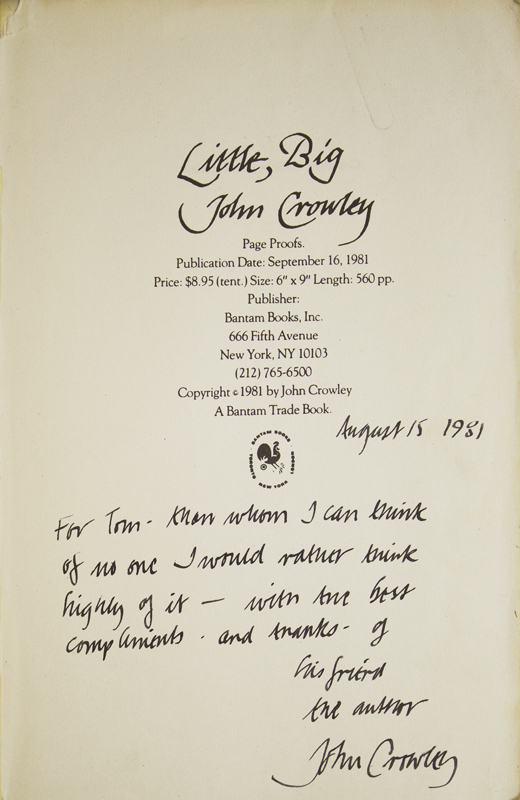
signed by John Crowley

John Crowley. Little, Big. New York: Bantam, 1981. Inscribed to Tom Disch.


An unexpected pleasure while writing A Conversation larger than the Universe was when my friend John Crowley agreed to write a foreword for the book. “A Hatful of Adjectives for Henry Wessells” is playful and will delight all who read it. The foreword also contains a sentence of rare power and insight crossing centuries from Hamlet to Lewis Carroll’s Alice and Crowley’s own masterpiece, Little, Big.

My friendship with John is rooted in books (no surprise, there). In early 2001, I wrote a piece on Little, Big for David Hartwell, “Appraisal at Edgewood”. When it appeared in my collection of short stories, Another green world (2003), I sent a copy to John. We would see each other at Readercon, and so on. Temporary Culture even proposed to publish Endless Things when it was in the wilderness but John sagely remarked he was seeking a wider distribution for the novel. I first met Gavin Grant and Kelly Link when Kelly read from Stranger Things Happen at the KGB Fantastic Fiction reading series. When Small Beer announced publication of Endless Things, Gavin suggested a small edition binding for presentation copies. I was happy to participate.
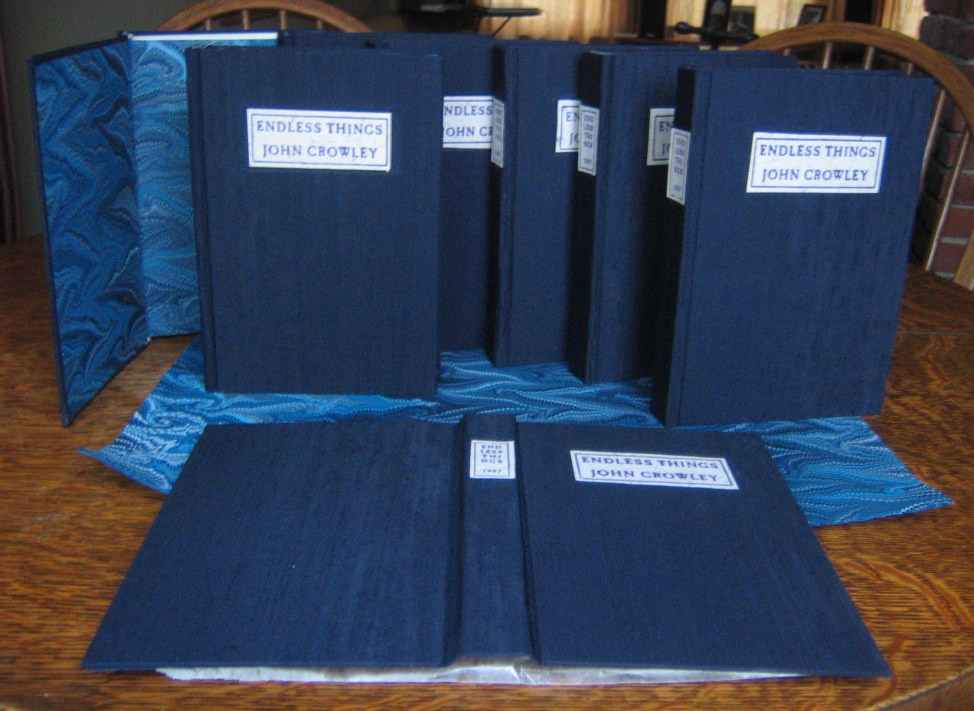
Endless Things, presentation bindings

Endless Things. Presentation bindings for Small Beer Press, May 2007.

Of course Gavin remembered this during his preparations for publication of John’s version of The Chemical Wedding and so a single specially bound copy was commissioned for a patron of the edition. What fun!
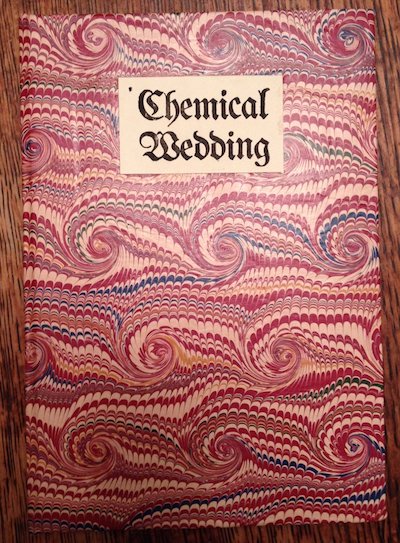
The Chemical Wedding by Christian Rosencreutz. A Romance in Eight Days. One copy, for Small Beer Press, 2016.

Given this long entanglement, how could I resist the challenge of creating an edition binding for the signed copies of And Go Like This? When he first saw the bindings, Gavin wrote to say “the waves in the world are the waves in the words”. I am honored to be part of such a fine book.
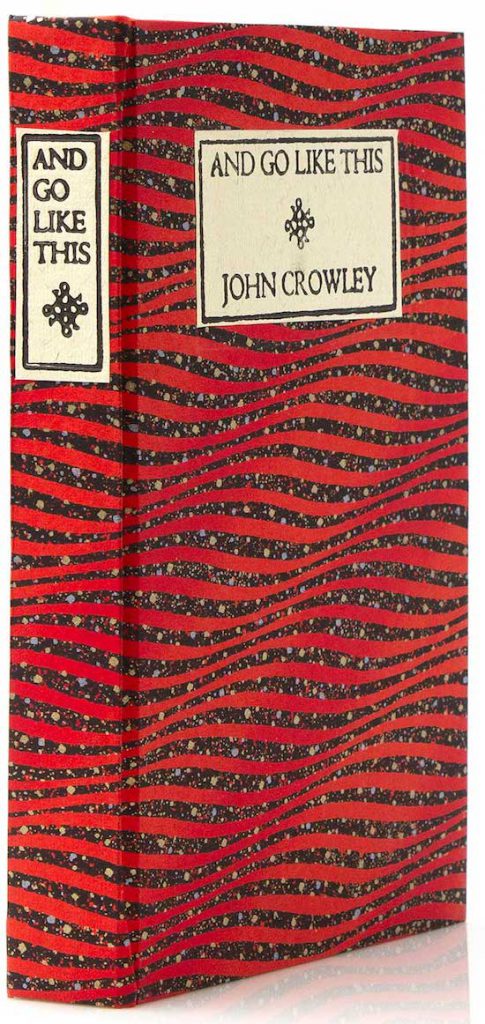
And Go Like This. Edition of 26 copies for Small Beer Press, November 2019.

The binding on the subscriber copies of A Conversation larger than the Universe was simple by design, handsomely executed by Trevor Rutherford with a hand printed label from the press of Jerry Kelly. John Crowley and I signed them one fine March morning in 2018. A few copies are still available.
And there are plenty of copies of the regular edition of A Conversation larger than the Universe In addition to the “Hatfulnof Adjectives”, there is an entire chapter devoted to Little, Big.

How Philip K. Dick Won a Hugo

In October 1962, Putnam published The Man in the High Castle by Philip K. Dick. This was his second novel to be published in hardcover, at a time when Dick was discouraged. His agents had returned the manuscripts of “mainstream novels” which no publisher had bought. Putnam also sold rights to The Man in the High Castle to the Science Fiction Book Club and that edition appeared a few weeks later.

When Avram Davidson, editor of The Magazine of Fantasy & Science Fiction reviewed The Man in the High Castle, in the issue for June 1963, he called it “a superior work of fiction” and concluded: “Don’t take it out of the library — buy it!”. Enough fans did, for the novel won the Hugo award at the September 1963 Worldcon. “Phil said he believed it was my review which won him the Hugo and gave his career a much-needed boost,” recalled Avram Davidson. The rest of Dick’s career is well known. He continued writing science fiction novels and gained a national and international audience after Paul Williams interviewed him for Rolling Stone in November 1975.

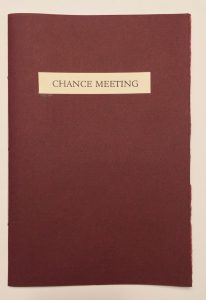
Chance Meeting publishes Avram Davidson’s 1963 review of The Man in the High Castle and his memoir of PKD from Locus 256, vol. 15, no. 5, for May 1982. It also includes a letter from Grania Davis from the same issue of Locus and a short essay by Henry Wessells.

Science fiction, rock ’n’ roll, & . . . bibliography

Timothy d’Arch Smith, portrait by Duncan Andrews

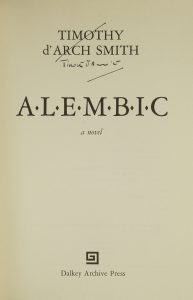
Alembic by Timothy d’Arch Smith is one of the great novels of rock ’n’ roll. The number of these is small and includes Don Delillo’s Great Jones Street, and High Fidelity by Nick Hornby, and a handful of other titles. The number of great science fiction rock ’n’ roll stories is even smaller, and includes Alembic, Bradley Denton’s Buddy Holly Is Alive and Well on Ganymede and Howard Waldrop’s “Flying Saucer Rock & Roll”.

The science in London antiquarian bookseller Timothy d’Arch Smith’s science fiction rock ’n’ roll novel Alembic (1992) is early modern alchemy in the service of a modern bureaucratic state, and the rock ’n’ roll is Celestial Praylin, a band on the scale of Led Zeppelin. The antics of Nicholas Sparks, depraved megastar frontman of Celestial Praylin, the crazed adoration of the fans, and the scary manipulations of the government office of experimental alchemy are reported through the eyes of Thomas Graves. Graves is an antiquarian bookman, and the sort of overly sensitive, self-centered post-adolescent person who is the ultimate novel protagonist — so long as he survives the events and grows up to tell the tale.

Timothy d’Arch Smith is also author of an excellent collection of essays, Peepin’ in a Seafood Store: Some Pleasures of Rock Music (1992), Love in Earnest (1970), and numerous other bibliographical works.

Timothy d’Arch Smith. Alembic. A Novel. Normal, Ill.: Dalkey Archive Press, 1992.

No. 57.

The poet in his library

A couple of the poems in The Private Life of Books were written in memory of friends who have died. “The algorithm of Serendipity ; or, The poem in the bookshelf” recalls the shop of Berkeley bookseller Peter Howard, which lived up to its name, Serendipity, as one would always find something apt or interesting in the labyrinth. David Streitfeld put it succinctly in a note in the New York Times upon the closing of the shop: “Mr. Howard wanted people to search for books and find not just what they were looking for but the book next to it, which they might want more if they only realized it existed”.

The fifth poem in the sequence, “The poet in his library”, was written in memory of poet and science fiction author Thomas M. Disch (1940-2008). I knew Tom during the last couple of years of his life, and we got on well. He was despondent all the years I knew him (had been since the death of his partner Charlie Naylor, I guess), only the gloom was often leavened with flashes of humor and dark glee. The portrait above is a still from filmmaker Eric Solstein’s recording of Tom reading from his poem cycle, Winter Journey, clips from which were screened at the NYRSF Reading Series Tribute to Thomas M. Disch on 5 June 2018.

During the production of The Booksellers, director D.W. Young taped me reading several of the poems from The Private Life of Books. He kindly made the file available and so here is “The poet in his library” :

Second Edition; or, Becoming a Book

How does a book get written?

The Private Life of Books is a sequence of six poems composed over a period of fourteen years. Even that single sentence conceals as much as it discloses. In my personal and professional life I look at books and think about them. The Private Life of Books is that thinking put down on paper. The title poem has its origins in a worn, heavily annotated book that came across my desk one day. The other poems in the sequence are about the idea of books as much as they are about (or for) people whom I have known, as reader, writer, bookseller, and friend. I wrote the first poem in August 2001, and part of the second poem (How books are made) a year or so later. Then there was a long interval of silence. After four years, I knew how to finish the second poem, and to begin or write three more within a year (two marking the deaths of friends). I had sent these off to various journals as they were written, to further silence. The poems are unrhymed irregular sonnets somewhat after the manner of Ted Berrigan. There are no footnotes to any of the poems.

The photographs are inseparable from the book. Paul Schütze, an Australian-born artist long resident in London, explores perception and the senses. His art encompasses music, photography, and scent. Some years ago he began a series of nocturnes, photographs by ambient or diminishing light at the John Soane Museum, at booksellers Maggs Bros. (then in Berkeley Square), and in other interesting spaces. Ed Maggs introduced us and the collaboration on The Private Life of Books is the result. I asked Jerry Kelly to design the book, and he was resilient enough to incorporate a sixth, unexpected poem written while the book was in proof.

In September 2014, the first edition was published. The reviewer for The Book Collector caught the mood: “marvellously sombre”. Another reader described The Private Life of Books as a Gesamtkunstwerk in book form. One of the original subscribers was Dan Wechsler, producer of The Booksellers, a documentary on the world of rare books in New York City. Director D.W. Young asked me to read the title poem in various shops and offices during the production of the film. Each take was successful, except for the intrusion of unmistakable New York sounds: a police siren, the whir of an air conditioner, or a door slamming in the distance. So, late in the process, I made a recording in a studio, which was used as the concluding voiceover to the film.

This second edition of The Private Life of Books, also designed by Jerry Kelly, includes all the photographs of the original edition in smaller format. Happy reading!